A visit to Chernobyl’s Main Repository of Nuclear Waste
The worst nuclear disaster in human history took place at the Soviet Union’s Chernobyl Nuclear Power Plant in 1986 — a nuclear reactor exploded. An enormous territory became alienated and fenced off forever. Recovery from the disaster is ongoing and far from over.
I visited the main nuclear waste repository in the Chernobyl Exclusion Zone.
The facility has 28 trenches that have been sealed off for eternity, one is in process of closure and one is being filled with upcoming stuff. It is named “Buryakovka” after the now non-existent village nearby.
Radioactive wastes from all over the place are continuously being collected and dumped at the Buryakovka burial ground and this process is far from over.
This what the storage looks like: a trench, one and half meters of clay, half a meter of rammed soil, pressed waste of all kinds, then another half a meter of soil, half a meter of clay and one and a half meters of soil with grass. The grass strengthens the ground while the clay servers as the trench’s waterproofing. This technique seems perfect: not a single leak has been detected in over 30 years.
At the ground of the facility, we immediately see an improvised memorial: a unique BelAZ haul truck used to clean the radioactive dust off houses in the nearby city of Pripyat. Pripyat is located so close to the Chernobyl Nuclear Power Plant that extremely radioactive nuclear fuel literally settled on the surfaces of buildings in the city.
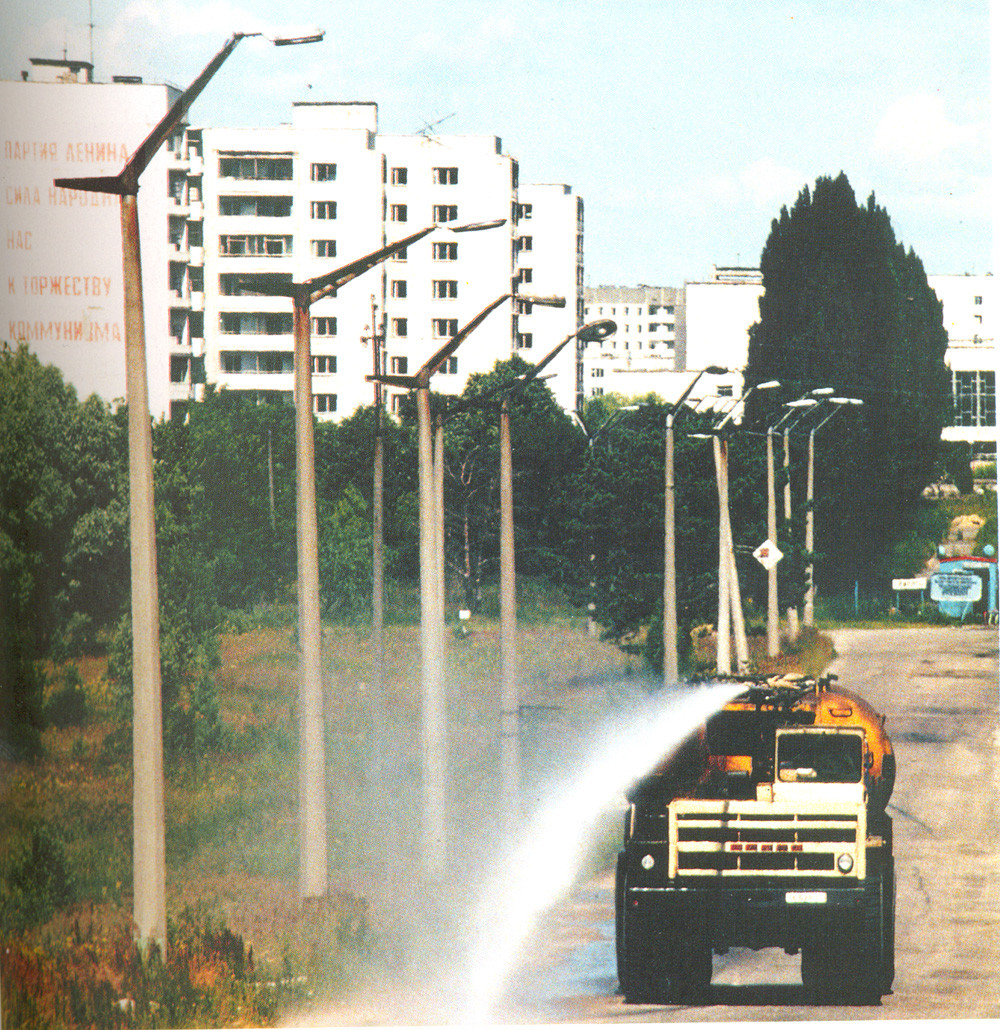
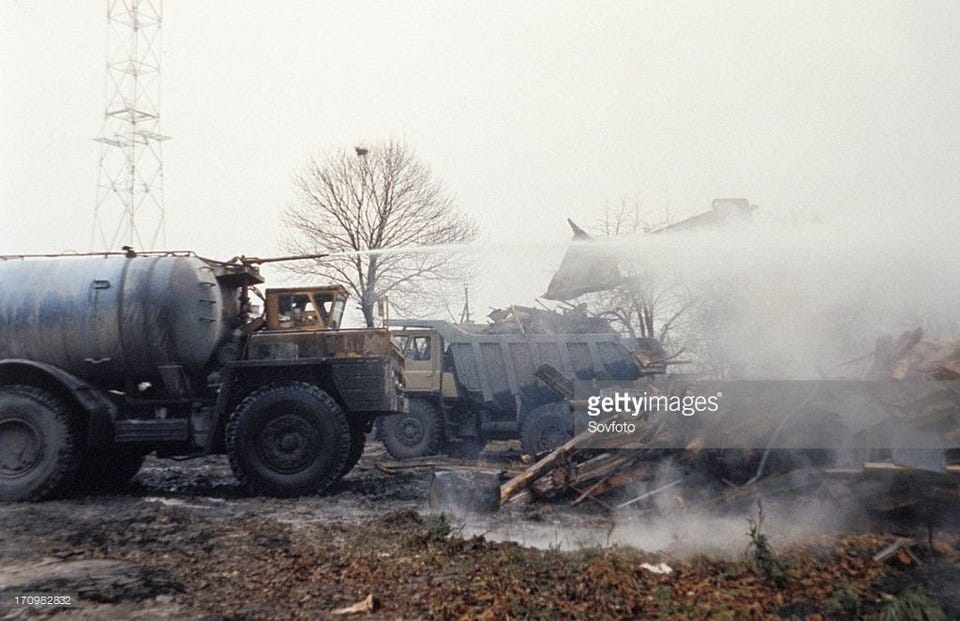
This truck launched an immensely powerful jet of water at a 16-story building in Pripyat to clean off dust from the walls of the structure. Because it was too powerful, operators used much simpler fire trucks instead to wash off smaller houses as the jet could destroy walls. They decided to keep this one BelAZ on the ground to serve as a memorial. Of course, it is highly radioactive, and no one is allowed to go near it. I would appreciate it if someone could send me a non-watermarked copy of this image from Getty Images.
The main danger comes not from the waste itself but from the dust that it releases into the air. Transporting some radioactive scrap across the Exclusion Zone is not that dangerous; what’s dangerous is when someone walks down the road and inhales a small radioactive particles from the waste. Dust management is therefore crucial. Only especially designated trucks can visit Buryakovka. Waste is transported under a tent, and dusty objects are sprinkled with a special dust-binding compound. In warm weather, all cars exiting Buryakovka are washed thoroughly.
Right by the trenches is a small storage of machinery used in the immediate recovery process following the Chernobyl disaster. Everything that could be washed off was washed off by the rain during the last 30 years since the disaster. The trucks are well settled on the ground surface; therefore keeping as they are is safer than burying them underground. Again, dust could be a problem.
An improvised steel cabin hastily was created during the disaster recovery process to shield drivers from extreme doses of lethal radiation. I would greatly appreciate it if someone could spot this exact car in the archival pictures and send me the photo.
Aircraft engines were stored separately. Perhaps someone thought that these engines could be scrapped for their precious high-quality metal after a certain period.
Quite a few burial grounds in the Chernobyl Exclusion Zone are designated for different kinds of nuclear waste. As we fill up these grounds, we build new facilities, and this is how it is going to be for the many, many decades.
More pics here.
This article was originally published on Medium.
About me

CTO & Founder in a group of IT companies. Software developer with over 20 years of experience in unix networking and web-based financial and trading software.